When it comes to dystopian fiction, Octavia Butler’s Earthseed trilogy holds a special place in my heart. Comprising Parable of the Sower, Parable of the Talents, and the posthumously published Parable of the Trickster, this series is a striking exploration of a future that feels both too real and unsettlingly different.

Picture a world not too far from our own – a world ravaged by climate change, inequality, and political turmoil. In the first book, Parable of the Sower, we meet Lauren Olamina, a young woman with a unique ability: hyperempathy. She can feel the pain and emotions of others, a gift that becomes both a burden and a driving force in her fight for survival.
As society crumbles, Lauren creates a new belief system called Earthseed, centered around the idea that “God is Change.” It’s a ray of hope amidst the chaos, challenging conventional notions of faith and offering an alternative perspective on life. This core philosophy not only reflects her resilience but also becomes a guiding force as she navigates a world where faith, desperation, and the indomitable human spirit collide. As we delve into Lauren’s narrative, we’re drawn into an exploration of identity, connection, and the profound impact of individual choices in a world on the brink of collapse.
Parable of the Talents, the second installment of the Earthseed trilogy, continues to explore the turbulent world of Lauren Olamina and her Earthseed philosophy. Set in the same dystopian landscape as its predecessor, this book delves deeper into the complexities of faith, power, and the consequences of human choices.
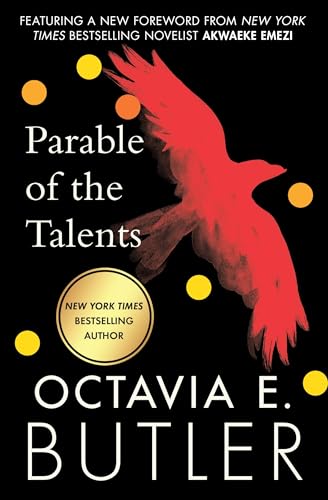
As Lauren strives to spread the teachings of Earthseed, she faces the rise of a fanatical religious movement that threatens to undermine everything she has worked for. The narrative intricately weaves themes of religious extremism, social dynamics, and the lengths people will go to in their pursuit of control. Through Lauren’s struggles, we witness the fine line between faith and fanaticism, as well as the moral dilemmas that arise when personal beliefs clash with the greater good.
We see Lauren’s character continues to evolve, becoming not only a spiritual leader but also a symbol of hope and resistance against oppression. Butler skillfully navigates the challenges of portraying a complex protagonist who is simultaneously strong-willed and vulnerable. Lauren’s journey is one of confronting the darker aspects of human nature while also uncovering the potential for unity and change. As the narrative unfolds, readers are drawn into the tension between the preservation of individual beliefs and the need for collective action. Through Lauren’s perspective, Butler invites us to question the extent to which personal ideologies can shape society and the ethical dilemmas that arise when one person’s vision clashes with another’s.
What’s truly remarkable about this trilogy is its ability to resonate with the issues of today. Although written in the ’90s and early 2000s, the themes of climate change, economic inequality, and the manipulation of religious fervor feel incredibly relevant in our modern world. Butler’s insight into these topics lends the series a timeless quality that’s hard to ignore.
Her writing style is immersive and deeply personal, placing us right into the mind of Lauren. Her journey from a sheltered individual to a resilient leader is a captivating one, and the emotional depth of her character is a testament to Butler’s skill in storytelling.
The world-building in these books is nothing short of masterful. The decay of society, the violence, and the stark divisions between different classes are portrayed vividly, creating a chilling backdrop for the characters’ struggles. Amidst the darkness, there are moments of connection and hope that remind us of the strength of the human spirit, even in dire circumstances.
Parable of the Sower trilogy is a must-read for anyone who enjoys thought-provoking dystopian tales. Octavia Butler’s ability to craft a story that mirrors our world’s challenges while offering a glimmer of hope is truly remarkable. As I read through these books, I found myself pondering the parallels between the narrative and our own reality, and I couldn’t help but feel a sense of connection to the characters and their struggles. In a world that often seems uncertain, this trilogy serves as a reminder that even in the darkest of times, human resilience and the search for meaning can prevail.
While available in both our Teen and Adult print and downloadable collections, readers are warned of adult themes and challenging topics including violence and assault.
 The Library Vault
Leave a comment