
“Wine & Words” has changed for this month. My apologies, to pair a wine with this specific biography would not do it justice. So, for this month it will be “Whiskey & Words.” Still a nice alliteration. A sensible play on words will journey us through the turn of the century. ‘What century?’ you ask. Well, read on to find out.
The lion is dead. The last romantic has weaved himself through our government, through our national parks, through our own sensibility, and resonated himself there. ‘The lion?’ you may ask. He is Theodore Roosevelt. A man I like to call ‘Teddy.’ The biography I read was written by H.W. Brands, an American Historian who has written roughly about thirty books. The biography is called the T.R. The Last Romantic. Teddy could have been a romantic; however, Brands never ties the thesis to its title, overtly. Brands reads the romanticism in Teddy’s character through his decisions, thoughts, and presentation to the world.
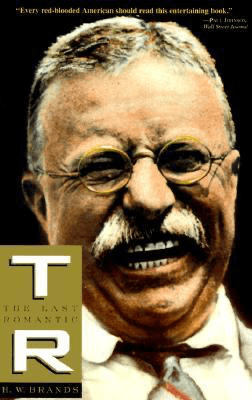
Theodore Roosevelt was our 26th President. He was not only a president, but also a vice president, the governor of New York, assistant secretary to the Navy, New York City police commissioner, a Rough Rider, Cattle Rancher, and more. An impressive résumé. This could be my own personal bias, but Theodore Roosevelt is hands down my favorite president. Did I live in his time? No. Then how can claim that he is my favorite? I admire what he stood for as a person of character. No one is perfect, neither are presidents.
Brands takes the reader on a journey through Teddy’s rambunctious, honest, and riveting life. Beginning with his childhood, and what a sickly child he was, Brands delves deep into the relationship that Teddy held with his father. Teddy idolized his father and designed his own sense of character after him, which Teddy would later continue with his own children. The death of Teddy’s father was a grim and dreadful experience. Teddy later experienced similar brokenness with the death of his mother followed by his young wife Alice mere hours later. These experiences in his youth shaped the man that would become the president of the United States, which was an interesting journey within itself.
Brands explores the political strife that upended the our government during the the turn of the century. The Republican Party was staying true to its roots imbedded with Lincoln, and the Democrats were holding on to Southern aristocracy. Such tactile information runs parallel with the havoc that runs through our own government today. When Roosevelt came into the presidency, it was not a result of his heart’s desire. His predecessor, President William McKinley, died by assassination.
Brands depicts Teddy’s presidency as highly international. As president, he presided over an astounding amount of foreign policy. Many are familiar with Teddy and his policing of the Americas, but he also acted as mediator between a Japan and Russia on the brink of possible war. Teddy won a second term, and eventually ran for third. Teddy completed his second term and returned to private life. But he began to despair of his “prodigy”, President William Taft, who did not fall into his footsteps to keep the Roosevelt legacy going. In the next election, Roosevelt ran as the third party candidate with the Progressive Party. Taft represented the Republican Party and Wilson ran for the Democrats. The American people made their decision; Wilson won that election. Roosevelt came in second. The results showed they were ready for a change of scenery that did not have Roosevelt in it.

I can explain all the wondrous and glorious events of Roosevelt’s life, but instead I recommend you read his biography by Brands. Brands uses simple language to portray the man called The Last Romantic. Brands did not paint the lustrous picture that some people seek when learning about our 26th President. He glorifies Teddy’s youth and explores the political frenzy that warped itself in the turn of century. When it came to his professional-political life, Brands portrays him as the well-known bull. Teddy blustered down everything and anything that came in his way, but was a sore loser when Wilson won the presidency. Brand renders Teddy as the last romantic rather as a humdrum.
When Roosevelt ran as a Progressive, he gave a speech to the American People. Right before he ascended to the podium, he was shot in the chest. A steel eyeglasses case in Roosevelt’s pocket saved his life. The bullet did not penetrate into his lungs, though blood soaked through his clothes. Roosevelt decided to give his 90-minute speech rather than go to the hospital for treatment: he wanted to be heard by the people, for a country he loved. I don’t see those actions as a bull or a humdrum but of a romantic lion, which is why Teddy has a place in my heart.
A bold and unruly whiskey will warm your body while reading The Last Romantic. But which one? It was a difficult decision. I was torn. Should the whiskey be from Teddy’s time? Should it be one of the unattainable whiskeys of today? But the more I thought about, the more I realized that Roosevelt would want the whiskey to put hair on your chest. Teddy would have preferred his whiskey to be a true, honest American. That, my friend, is Elijah Craig. This is in regard to the taste of the whiskey and not its background nor Craig himself.
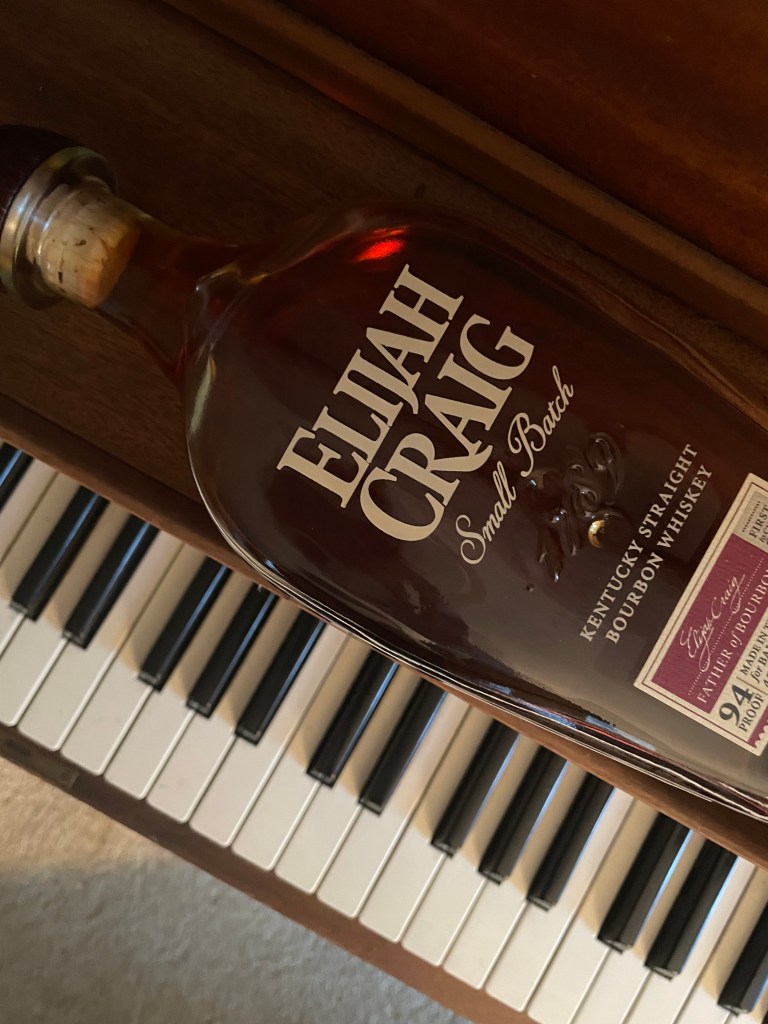
Just a little information about “whiskey,” which is an umbrella term. Underneath that umbrella is Irish, Scotch, Bourbon, American, Japanese, malt, rye, wheat, Canadian, and, really, the list goes on. Elijah Craig is a bourbon, and bourbon was born and bred in America. Elijah Craig gave birth to bourbon. The year was 1789, and they won’t let you forget it – it’s printed in the center of the bottle. Bourbon is crafted from grain, water, fire and time. All these elements resemble Roosevelt. Teddy was a grainy individual, he loved being out in nature, hunting or exploring the unknown. Water, for Teddy, represents the turning of the tides of his political career. Fire represents his spirit: it burned ’till the light blew out. Teddy’s time was impeccable until it faded slowly away.
Elijah Craig is a classic, just like Roosevelt. Some may perceive Teddy as a shadow to his young cousin, Franklin D. Roosevelt, like some perceive Elijah Craig as a shadow to Blanton’s. But once that warm caramel liquid meets your lips and the hints of oak and cinnamon waft into your senses, your mind and muscles will relax to sweet serenity. The richness of Elijah Craig and the fullness of Brands’ biography will keep you toasty with the dark winter hours sneaking into the cusps of the coming days. Enjoy and please drink responsibly, Teddy is watching.
 The Library Vault
Leave a comment