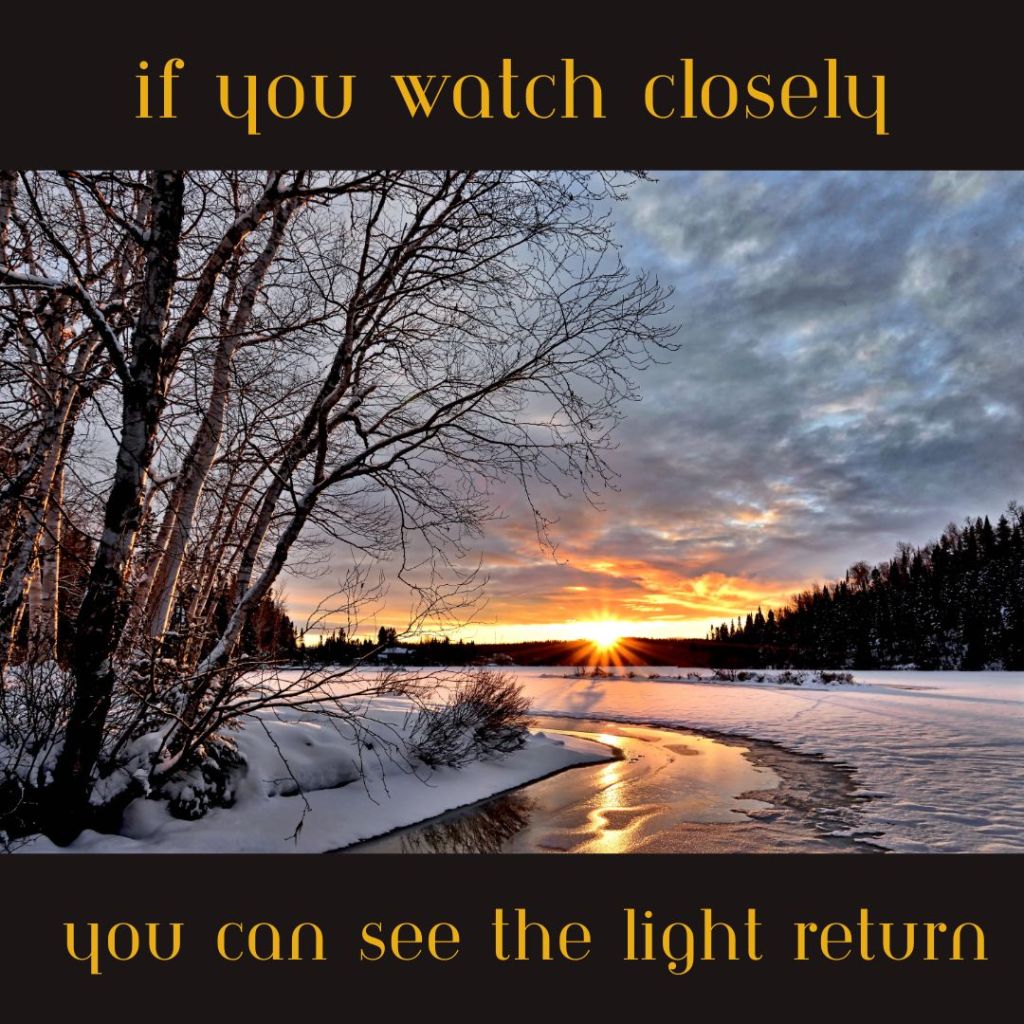
“This is the solstice, the still point of the sun, its cusp and midnight, the year’s threshold and unlocking, where the past lets go of and becomes the future; the place of caught breath.” ― Margaret Atwood, Eating Fire.
Whether you celebrate Christmas, Hanukkah, Kwanzaa, Yule, the Winter Solstice, Diwali, Soyal, Yalda, Dōngzhì, Lohri, New Year (Chinese, American, Yom Kippur, or other), or nothing at all … you’ve probably noticed how dark it’s been lately. The drive home has been mostly inky shadows punctuated by harsh modern headlights. Holiday lights have been the only non-depressing bright spots from the passenger seat in the early evenings.

From the end of Daylight Savings Time on November 5th until the winter solstice on December 21st, we wait for the return of the light. These are the longest nights of the year, and the shortest daylight hours. In northern climates like New England’s, the harvest ends in October with celebrations like Halloween, Thanksgiving, Samhain, Diwali, and the Day of the Dead (to name but a few in the world) … and then we wait, in the dark.
We wait in the darkness for the slow return of the sun. On December 21st, 2023, the northern hemisphere will begin to slowly tilt back toward the sun. We will gain a minute of daylight every day until the Summer Solstice on June 20, 2024. In the southern hemisphere, they’re on the opposite schedule. They will begin losing daylight while we gain it – a celestial teeter-totter.
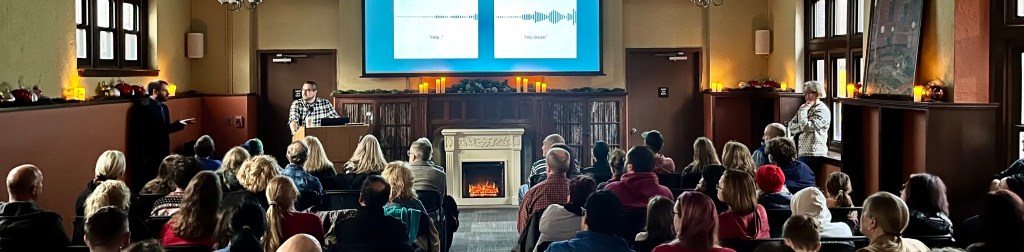
On December 9th, the Eastern Connecticut Paranormal Society (ECPS) presented on their findings from two investigations in 2023 at Russell Library. When we looked at our respective calendars in the fall, we found that early December was the soonest available date for their visit. I initially thought that we should schedule the event for later next year, closer to the Halloween 2024 season, instead of during the cheerful holiday season. However, my librarian colleagues quickly pointed out that ghosts and the holidays go really well together. I had never thought about that before, but clearly they were right. When ECPS presented, so many folks came to the Hubbard Room that some of us had to stand to listen. My colleagues had decorated the Hubbard Room in full holiday regalia, complete with glowing fireplace, evergreen boughs, and candles. Somehow, the mix of holiday decor and eerie findings struck exactly the right note.
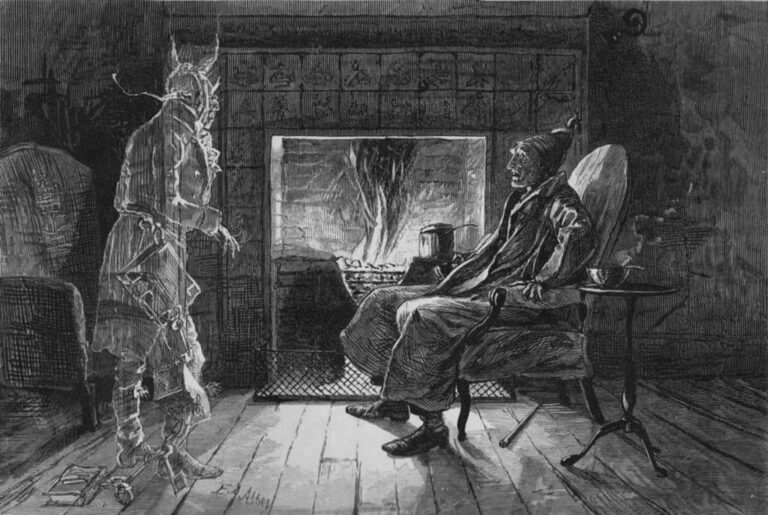
In my early November post on Storytelling at Russell Library, I touched upon the tradition I’d learned about of Victorians telling ghost stories at Christmastime. Why do we tell ghost stories in December? At first, in early November before the time change, the connection puzzled me. My pondering continued as I drove home every night in the increasing dark, amid increasing reports of collisions due to the time change, and with my young child in the back seat. The answer soon became obvious: it’s scary in the dark.
If it’s scary to drive home in the dark for me in the 21st century with all our solar power, heat pumps, electricity, and air bags, imagine what it would have been like for families until a hundred years ago when electricity became commonplace. Centuries ago, they only had fire to light up the long nights. Quality wax candles could only be afforded by the wealthy. Everyone else had to survive with firewood and animal fat candles. The poorer the family, the less light they had in the cold winter nights. What better time to tell ghost stories, than in the dark while huddled together for warmth?
One of my favorite and most formative books, At Day’s Close: Nights in Times Past by A. Roger Ekirch, details how premodern Europeans dealt with the dark:
Ekirch’s “enthralling anthropology” ( Harper’s ) exposes the nightlife that spawned a distinct culture and a refuge from daily life. Fear of crime, of fire, and of the supernatural; the importance of moonlight; the increased incidence of sickness and death at night; evening gatherings to spin wool and stories; masqued balls; inns, taverns, and brothels; the strategies of thieves, assassins, and conspirators; the protective uses of incantations, meditations, and prayers; the nature of our predecessors’ sleep and dreams ― Ekirch reveals all these and more in his “monumental study” ( The Nation ) of sociocultural history, “maintaining throughout an infectious sense of wonder”.
–Booklist Review

Other cultures must have had similar experiences, resulting in the fall season first of harvests and then hunkering down for the winter. Before refrigerators and freezers, not all of the food harvested would have survived the winter. Fattening up before the perishables perished and the lean months set in would have been a survival strategy. Starvation during the winter would have been a real possibility for many people, especially the further back in time you go.
With life and death, darkness and life, on their minds, it’s no wonder that so many celebrations of life and death from so many cultures and religions developed during these pre-winter months. Instead of fattening up to survive alone, our ancestors from many cultures decided to hold a series of parties and eat together. They brought evergreen branches indoors and lit up whatever they could, like we do. Many people even today suffer from depression during the winter months, so it makes sense to throw the biggest parties at the darkest time. With so much darkness outside, we need the hope of future life indoors with us. Nature is life. When nature sleeps, our hope often sleeps, too.
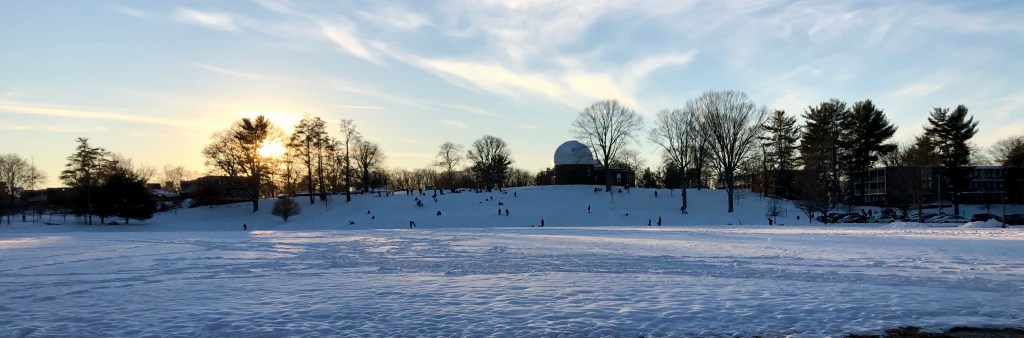
So whatever holidays you do or do not celebrate this time of year, I hope it brings you comfort to know that so many of us are hunkering down together, waiting for the light to return – and celebrating when it comes, even in the small measures of a minute a day. We universally seek light, warmth, comfort, and companionship. Now that the longest night has passed, the daylight begins to creep back, one minute at a time. The time of greatest darkness is over. Spring may be a long way off, but in the meantime we have the hope of snowfalls, sledding, hot chocolate, and good books. Below are some cozy winter book titles, and a Russell podcast, to help.
Want to know more about hygge and how to get cozy this winter? Listen to Russell Library’s podcast all about it.
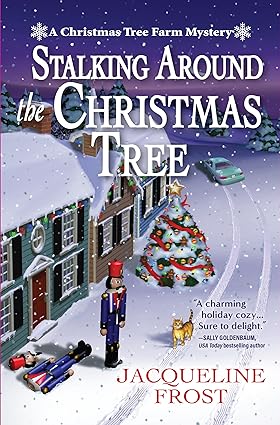
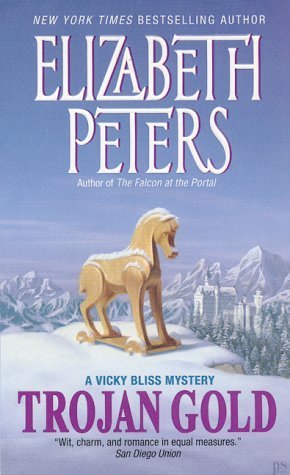
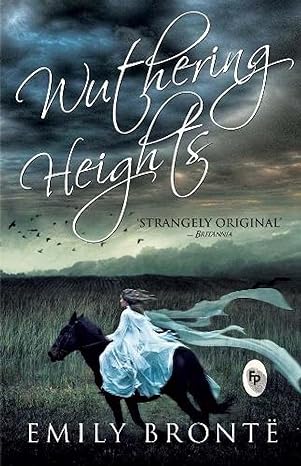
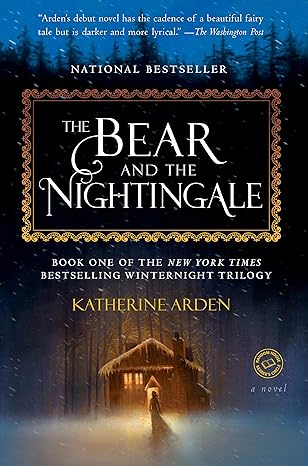
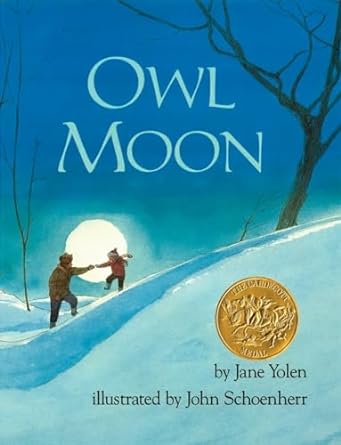
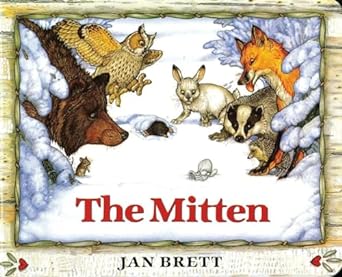
Russell Librarian recommended reading for the cold, dark winter months:

 The Library Vault
Leave a comment