
The Twenty Seventh City By Jonathan Franzen
Do we remember every book that we are reading when we start a new job? Are we even reading a book? Not to add to the cliche, but being a librarian, I have a tendency to always have a book in hand. At the time I started here at Russell, the book I was reading was, The Corrections by Jonathan Franzen. It was around the holidays, so either the perfect book to read or the absolute worst. Well, I found it to be one of the greats! It was my first Franzen, like many fellow readers. There is a ridiculous story of The Corrections and Oprah, but either you remember or can do a simple Google search. Let fast-forward to about a month ago where I stood in a familiar bookstore and found the Franzen I was looking for…

Perusing the hipster filled streets of a trendy Brooklyn neighborhood, in search of a specific novel. The novel was never found, but brought me back to a sense of familiarity. Rounding the corners of books, in hope to find the novel that has made its way back to the hands of readers, due to the algorithms of social media. I came across Franzen. It was the first novel that he published, The Twenty-Seventh City. To say the least, I was excited. I realized this was my purpose. People step in and out of your life for a reason, so do books. It was time to step away from the algorithm and step back to Jonathan Franzen.
The Twenty-Seventh City is a peculiar novel. I think, I need to emphasize that this is his first novel. It was published in 1988 and I would not say that it aged well. I may not be alluring the reader to embrace this novice journey of a young Franzen, but I think it is essential. Franzen’s novel The Corrections just made the top five of the New York Times best novels of the 21st Century. It is proficient to see the journey. Franzen hasn’t yet found his voice of comprehensive characters, centered around the American Family. The Twenty Seventh City is a novel that is developed from the base of a political conspiracy theory. It takes place in St. Louis, Missouri with the presence of a new Police Chief S. Jammu who is from Bombay, India. Jammu is a charismatic and is encumbered by almost everyone, except the capitalist group of businessmen, who run the failing city. One of those men, is Martin Probst, who eventually follows suit into the the political unravel of St. Louis with Jammu by his side. There are some plot holes and lags thorough characters, that he grows so well to write. I think that is why Franzen readers should pick up this novel. This is an example to show how writers evolve and find their true voice. Even writers that we deem great, we all start off from somewhere.
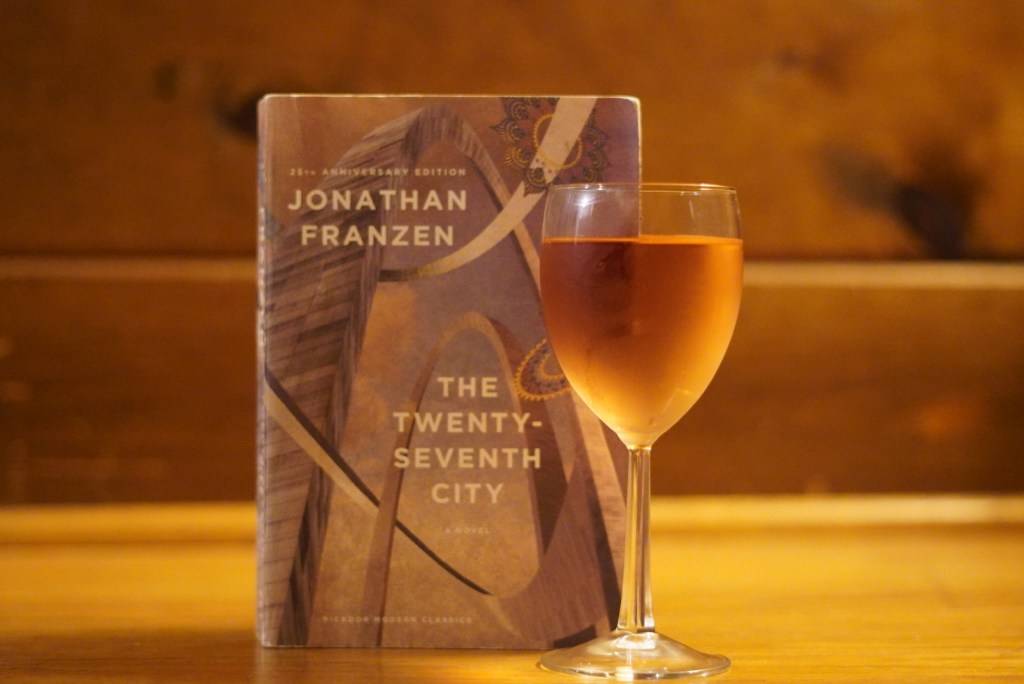
The novel is under an umbrella of what is dark comedy. I personally did not find the novel funny, but saw it as a young writer grabbling with the idea of sarcasm. The comical aspect to this, is that Franzen denotes his first novel. He states that is was one big mask, “I was a skinny, scared kid trying to write a big novel. The mask I donned was that of a rhetorically airtight, extremely smart, extremely middle-aged writer. To write about what was really going on in me with respect to my parents, with respect to my wife, with respect to my sense of self, with respect to my masculinity—there was just no way I could bring that to the surface.” I thought this post might have more of a focus on the novel itself; however, after listening to podcast and reading reviews, I understand it is larger than just this novel. Franzen is known as a postmodern great American novelist. I am not going to analyze each and every Franzen novel. There is a podcast that does that, known as the Mr. Difficult. The discussion of the podcast made me look at each of his novels in a different way.
Yes, I have read all of Franzen. Once you find an author you love, it is difficult to not read everything they write. The funny part is, you don’t always have to like each story, you just end up reading it anyway. The part I want to emphasize is that we evolve as artists. There is significant growth presented here in Franzen’s writing and it would be shameful not to hone in, on the gravity of the art of his written word. This journey began three years ago when I picked up The Corrections, for what reason, I think David Foster Wallace, but please don’t tell Franzen. And the journey continued when I was scampering around Brooklyn looking for the latest ‘bookstagram’ novel, that haunts my social media feed. A thing Franzen would hate most of all. I came across the novel that was meant to enter my life and took a step back and saw what I was doing. I was rummaging around on hot day in the concrete lands looking for something that was a trend rather than depth. Franzen centered me that day, and this blog is a salute to him and his evolved writing. The evolution is now one of the greats! To pair a wine with The Twenty Seventh City should be that of a similar tale. Not a tale of political conspiracy theory, but a tale of a wine that evolved into greatness.
The heat has been hitting the northeast wave after wave. We have not caught a break here in ole humid New England. I have been drinking quite a bit of rosé. Rosé has an compelling reputation. Rosé can be looked at this mass marketed product, in which I think Franzen would hate, but appreciate. In one stance, it could be the hot girl summer drink; ‘rosé all day’ vibes. Or it can be looked at as a serious and intricate wine. It depends how it is being produced. This follows suit with Franzen’s writing career.

This will be brief, we will start with rosé production in America. By the mid 1970’s rosé was being produced with the run off juice from barrels of Zinfandel and fermented separately to create the light pink liquid. This became known as the famous white zinfandel. The name as Sutter comes to mind, as a mass producer of this “blush wine.” I would say, it was not the most serious wine, and personally does not tickle my fancy. However, I think all of wine drinkers from time to time or at one point in our lives have had a white zinfandel cross our palates. Winemakers have continued to develop and experiment with the luscious pink juice. By the nineties, rosé was being produced from pinot noir from the notable Tony Soter, of Soter Wines to create a nice dry complex wine. Which aligns pretty much with Franzen’s journey and the creation of his great novel, The Corrections. The development of a domestic rosé that competes with the great French wines led to the importation of more intricate rosé from around the world.
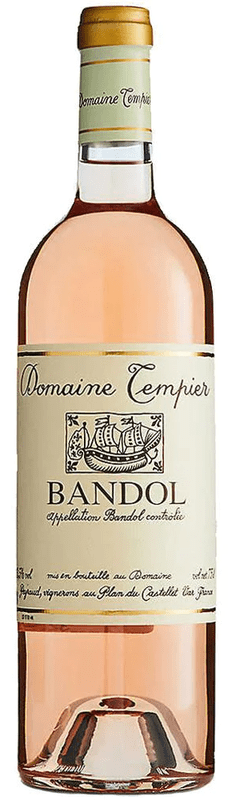
The importation of amazing rosés into the States allowed our palates to taste one of the best rosé produced from the south of France. The wine is Domaine Tempier Bandol rosé, the most sought after rosé in the summer. Made from the hills of Provence, this intricate rosé holds hints of grapefruit and a freshness that cannot be compared. Its light blush brings a warmth to your cheeks, while it cools your inner temperature. I love this wine and when I came across it, my mouth dropped and my wallet opened. Franzen’s writing is now up to par with a notable Bandol Rosé structure, his writing is well formed and thought out with purpose. There are no plot holes and undeveloped characters that is why he has become known as one of the greats! Franzen didn’t start from there, he evolved. I should have chosen a domestic rose, but with the rise of knowledge and production of serious rose in the states paved the way for winemakers across the globe to present their blush wine to the American people. I had to pick one of the greats because I think Franzen is one of the greats! Cheers!
 The Library Vault
Leave a comment