My favorite uncle and I finally managed to connect on the phone after almost two years. When I asked him “How are you?”, he immediately answered, “I’m terrible. I’m constantly worried about the state of the world. I’m so worried that I can’t sleep at night.” He then started talking about covid, genocide, war, pharmaceutical companies, and – of course – the election. He obsesses over the state of the world through an addiction to the news.
I know he’s not alone in this. I used to be caught up in it, too. I told myself that a responsible citizen had to keep abreast of current events. As a mother, I had to protect my children by staying aware of any health or political threats that might be out there. Like my uncle, staying constantly abreast of the news caused me terrible anxiety – to the extent that two health care providers recommended that I stop following the news entirely. Shocking, I know. While I don’t follow their recommendations 100%, I have stopped the habit of ingesting news on a daily basis. Either I receive my news filtered through my spouse and my friends, or I listen to NPR’s Wait Wait Don’t Tell Me podcast, a comedic news show that puts almost everything in a funny light.
While I don’t expect everyone to go to my extremes, as an information professional I do believe that we all have the same problem to address in our own way: how do we live in the Information Age and mentally survive? Think about how much news, data, and general information the average person is exposed to on a daily basis now compared to 30 years ago. The Internet has given the vast majority of us an entire world of news and information at our fingertips 24/7. That’s hard to resist – and completely unnatural and unhealthy, if one isn’t careful.
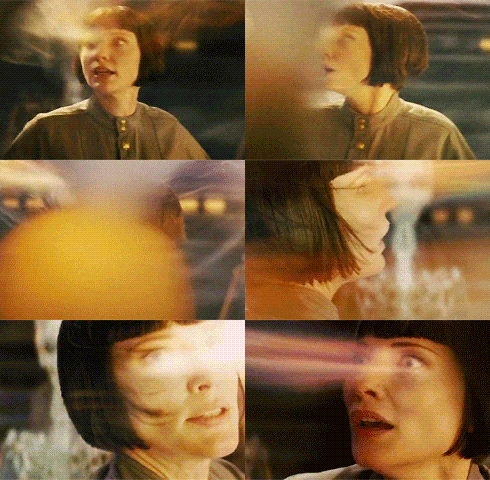
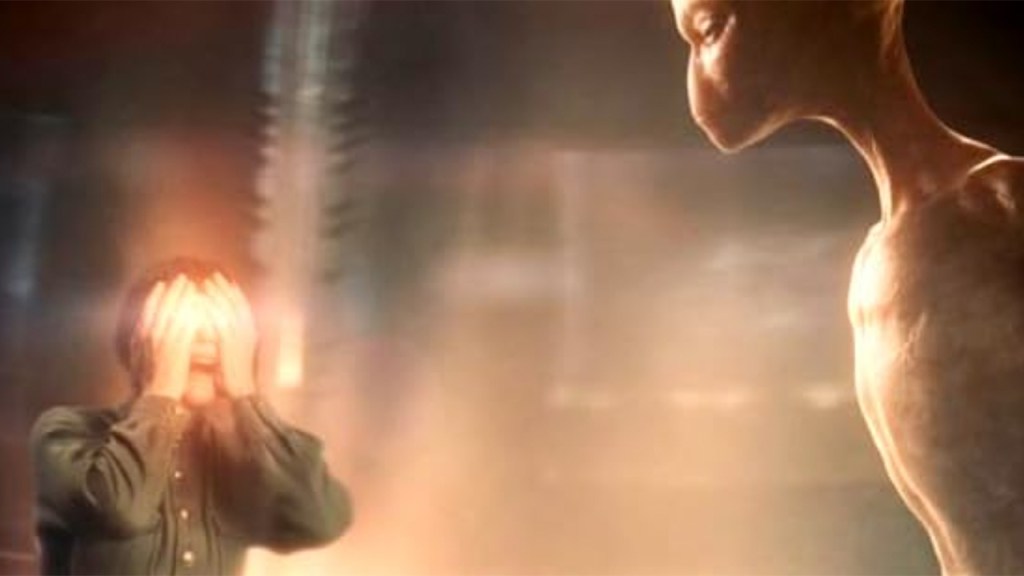
Do you remember the movie Indiana Jones and the Kingdom of the Crystal Skull from 2008? It starred Harrison Ford as Indiana Jones and Cate Blanchett as Col. Dr. Spalko, who reunites an alien skull with its crystalized skeleton. The alien reanimates and offers Dr. Spalko “omniscience” as a reward for her service. She foolishly agrees, saying, “I want to know everything.” The alien then attempts to transmit unlimited data into Dr. Spalko’s head, which catches on fire and disintegrates her entire body. A head catching fire from too much information has always struck me as being the perfect analogy for living in the Information Age.
“I want to know everything.”Too much information.
So what’s a responsible citizen to do? Below is my first recommendation as an information professional.
1)Remember the nature of news. There’s an old saying by newspaper reporters, “We don’t cover the planes that land safely.” News is a business, and those businesses are usually for-profit. News companies have many competitors – thousands alternative news sites have launched since the advent of the Internet – and they can’t survive if they don’t produce headlines interesting enough to bait readers into clicking on their links or tuning into their channels instead of the other guys’. Hence the term, “Clickbait”.
As humans, we have survival instincts that prime us to choose the dramatic, potentially life-threatening headlines over the happy, sedate headlines. Journalists have to write compelling stories with eye-grabbing titles, which results in headlines that reflect dramatic events, not trends. If you don’t remember the nature of news, it’s easy for readers to get the impression that the world is a horrible place with nothing good happening in it.
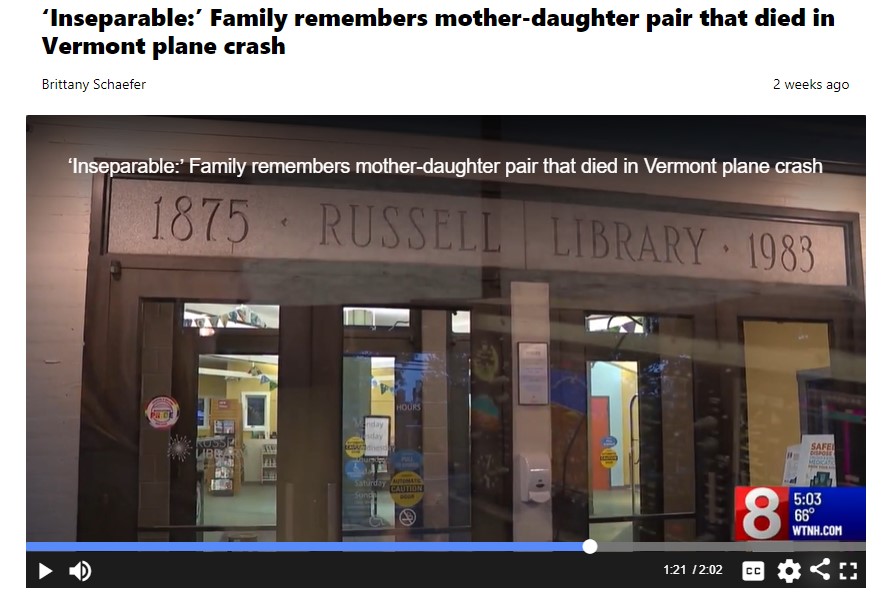
“If it bleeds, it leads” adage demonstrated by recent news coverage of local airplane crash victims and a vigil for them held at Russell Library.
Earlier this month at Russell Library, we experienced this phenomenon first-hand when two of our patrons died in a local airplane crash. The friends of the young girl wanted to hold a private vigil in our young adult area called ‘The Space‘ several days after the crash. They specifically asked for no reporters. Instead of honoring that request, news teams attempted to swarm the library. Library and school administrators had to protect the young people in the vigil by using themselves as barricades between the youths and the reporters. An assistant director had to personally escort students from the vigil through the back passageways of the library to help them escape. Students willing to act as decoys went out the front to distract the news teams as their grieving friends had to literally sneak away for privacy.
It’s easy to blame reporters for these stressful incidents, but they’re just trying to bring home paychecks like the rest of us. Readers and viewers willing to spend hours every day clicking on sensational headlines and one-sided stories create this marketplace. When we choose to spend substantial time following the news in its current iteration, we feed the beast. The next time you turn on the local news or scroll through your news feeds on social media, keep the bigger picture in mind: the news is not an accurate representation of reality.
 The Library Vault
Leave a comment