During a recent visit from my husband’s parents, I found my father-in-law reading my daughter’s book Bad Kitty for President by Nick Bruel. It’s a middle-grade reader and my daughter is eight years old. My father-in-law has a Ph.D. in physics and always brings a bag full of books when he visits. But he liked the Bad Kitty book so much that he went in search of other books in the series around our house, and could be found reading them (and laughing) the entire trip.
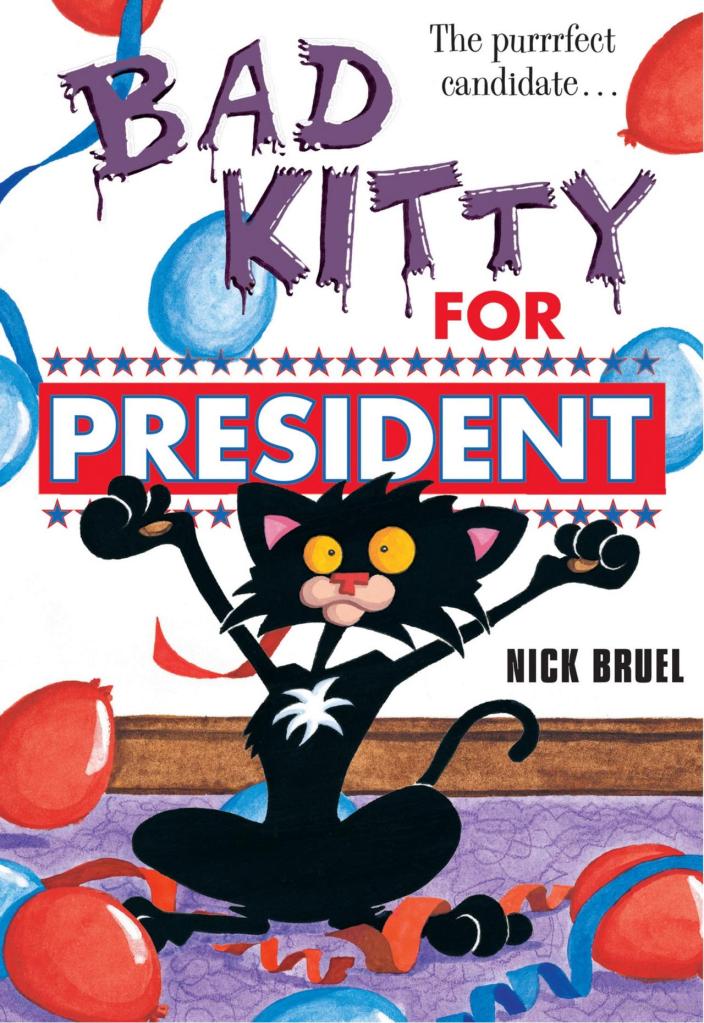
Bad Kitty for President is ostensibly just a funny story about a housecat who doesn’t like how her new neighbors behave. She runs for president of the block to try to shape things up. But there are multiple hidden-in-plain-sight levels of meaning for older readers, too. The book teaches readers about the U.S. presidential election system in a funny way, merging fiction and non-fiction into one narrative. It’s also a clear satire of our political process, holding up a mirror to our often crazy society. If you need a good laugh about politics in the United States, read this book.

Many books in the Bad Kitty series satirize other aspects of society, as well. Bad Kitty: Kitten Trouble looks at immigration and kindness toward those less fortunate than ourselves. Bad Kitty Makes a Movie makes fun of social media and the disintegrating film industry. Bad Kitty Gets a Phone addresses technology addiction. Bad Kitty Goes On Vacation makes fun of amusement parks and commercialism. All of the books include the hysterically inept and bumbling Uncle Murray, who often learns a lesson in his attempt to cope with Bad Kitty. Uncle Murray also hosts “Uncle Murray’s Fun Facts”, which are occasional two-page spreads interspersed in all the books featuring true and often useful information about topics in the story.
As a librarian and a parent, I’ve found many different books and movies geared toward kids that work for multiple generations. The most famous example in today’s culture is the Bluey “TV” series out of Australia. Kids love the cartoons because they’re funny and relevant to their lives. Parents love the series because of the positive messages paired with real-life, day-to-day family challenges, and sophisticated music.
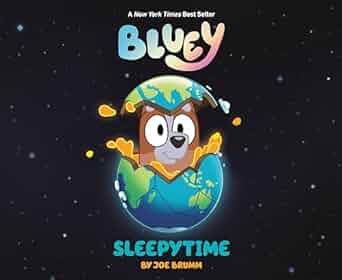
One of the most famous episodes, “Sleepytime”, focuses on the difficulty parents have getting their kids to stay in their own beds and sleep through the night. Most of the episode takes place from the perspective of the youngest child, Bingo, as she rockets through the solar system in her dream. Bingo wants to have a “big girl sleep” by waking up in her own bed in the morning (instead of hopping into her parents’ bed in the middle of the night and staying there until dawn). The obstacles she encounters in the solar system while she dreams parallel obstacles in the waking world.
Virtually every family with children knows how monumental it is to a family’s well-being when a child finally sleeps through the night. The episode reflects that hugely important milestone by setting most of the plot in space to the “Jupiter” movement from The Planets symphony by Gustav Holst. It’s a deeply dramatic and moving story yet clocks in at only 7 minutes long.
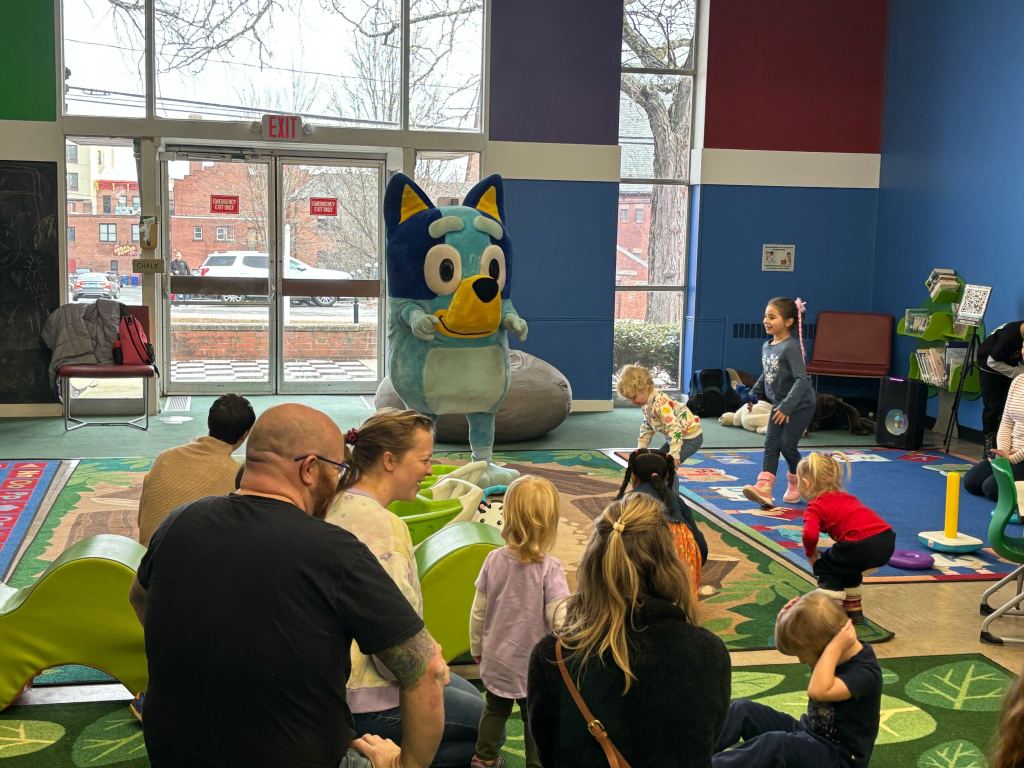
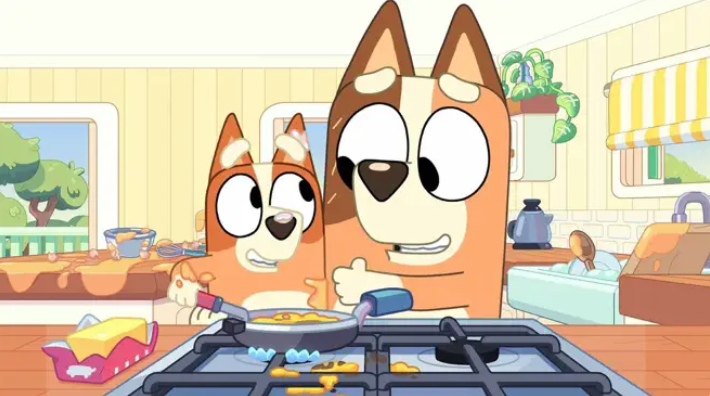
Multiple moms have told me that they cry whenever they watch “Sleepytime” with their kids … or maybe they watch it alone. I know I’ve been known to watch Bluey episodes after my kids have gone bed when I’ve needed some parental support. Many of the episodes feel like they offer even more for parents than for kids by addressing issues like getting to work on time (Work episode), working from home (Yoga Ball episode), getting chores around the house done (Bingo episode), shopping (Hammerbarn episode), and cooking (Omelette episode) … all with kids underfoot. Unlike in less-realistic kids series (I’m looking at you, Cocomelon), the parents (Bandit and Chile) are far from perfect and have realistic responses to their kids antics. They help me feel better about myself as a less-than-perfect parent.

The Bluey series is so popular that they’ve translated many of the episodes into popular children’s picture books. At Russell Library, we currently own 26 copies of these Bluey books, not including the DVDs. That way, families can both cut down on screen time while reading books that their kids will find irresistible. I think of cartoon-based kids books as gateway reading drugs.
While there are many funny book series for kids, the Diary of a Wimpy Kid series by Jeff Kinney takes the omelette. I’ll admit that I didn’t think highly of the series when I glanced at the simply-drawn covers. When my daughter brought one home from her school library, I worried that it wouldn’t be appropriate for her age. So I picked it up and read it to her after dinner that night as she got ready for bed. I fell in love immediately, around the same time that I started cracking up and couldn’t stop laughing. The next day, I brought her home half of the series from Russell Library, to encourage her to read more.
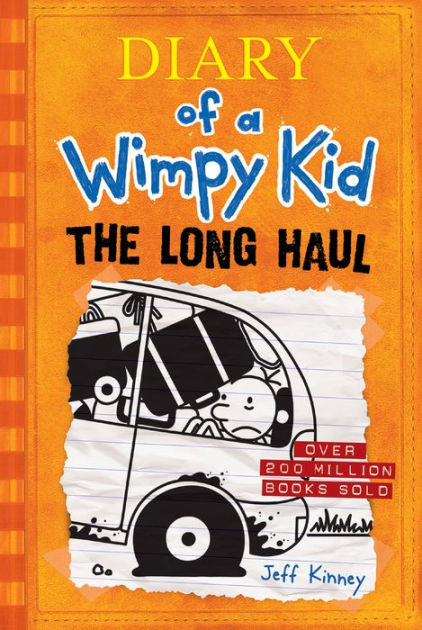
Like many popular kids series, Diary of a Wimpy Kid intersperses text with simple images. New readers and reluctant readers find broken up text less intimidating than paragraph upon paragraph of straight words. They’re a great intermediate level to bridge the divide between picture books for younger kids and traditional chapter books for older kids.
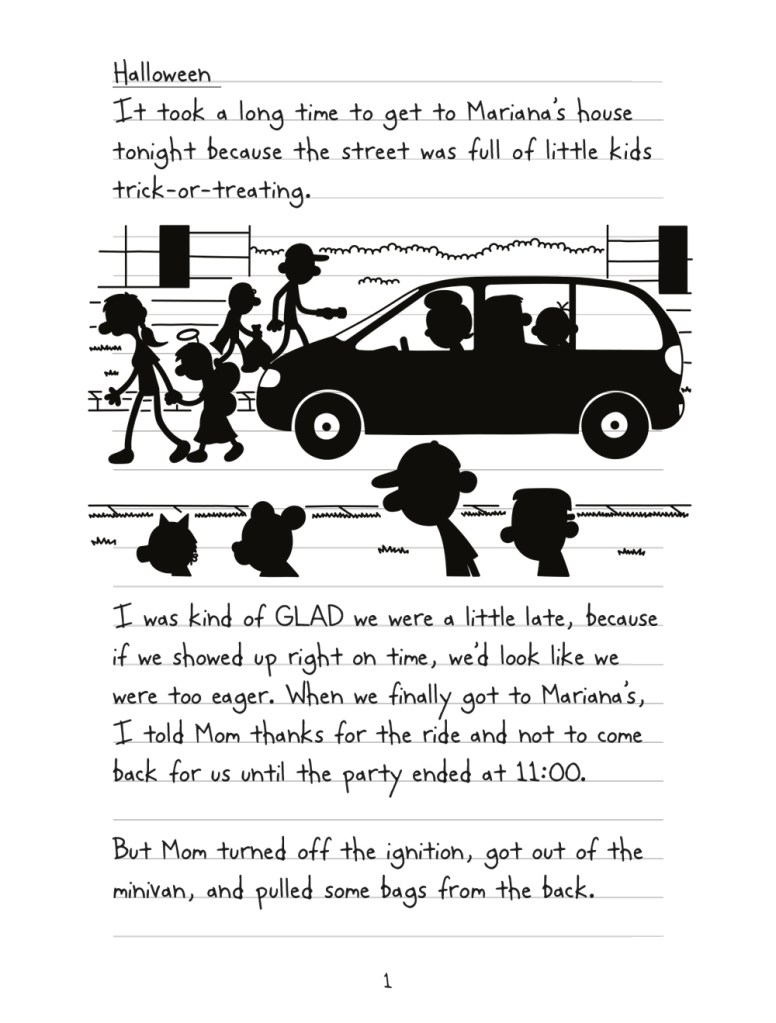
In the case of Diary of a Wimpy Kid, there are almost 20 books (and counting) to keep kids addicted for months at a time. The simplistic images emphasize both the immaturity of the main character, Greg, and his completely normal lower-middle-class life. In the first book, Greg starts middle school: an intimidating time of life for preteens. They’re suddenly taken away from the relatively coddling elementary school culture and thrust into an often fend-for-themselves middle school culture. Their minds and bodies are both changing radically and at top speed.
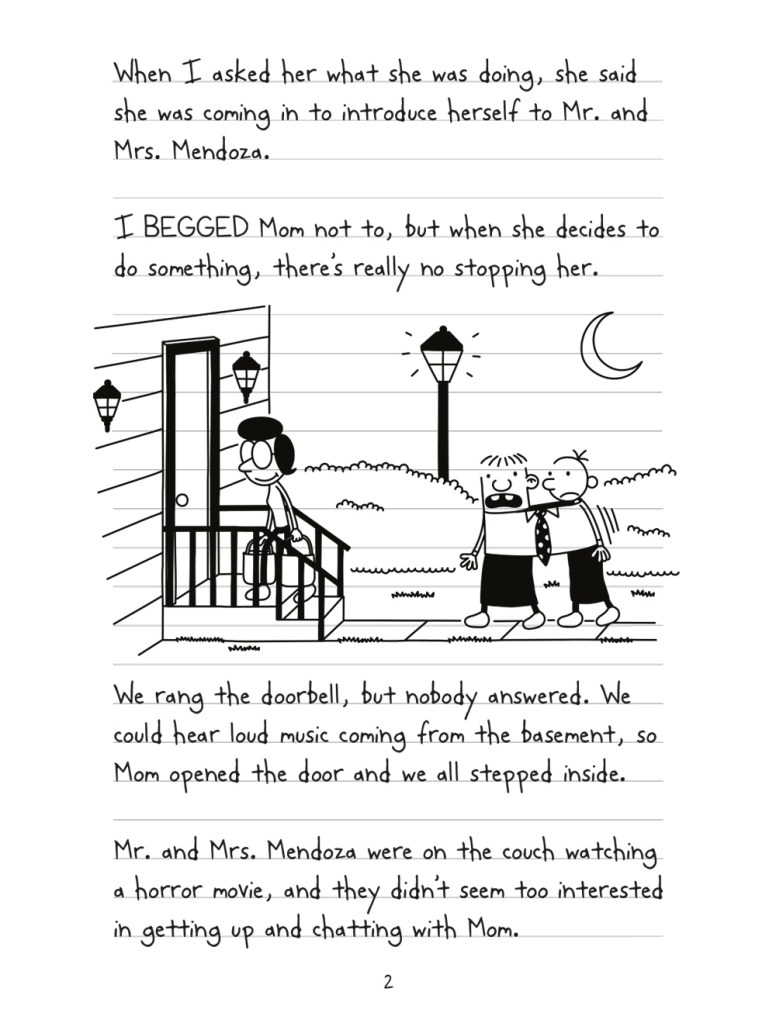
Greg isn’t particularly smart or cool or anything. He’s extremely average, and therein lies the appeal. As a classic underdog, he often comes up with inadvisable solutions to his every day problems — like finding a seat in the cafeteria or surviving gym class showers. He never profits from his hijinks, so his mistakes can serve as a lesson for what kids shouldn’t do. But he’s so relatable and funny that the books can be impossible to put down. They’re also relatively quick reads, giving reluctant readers a sense of accomplishment.
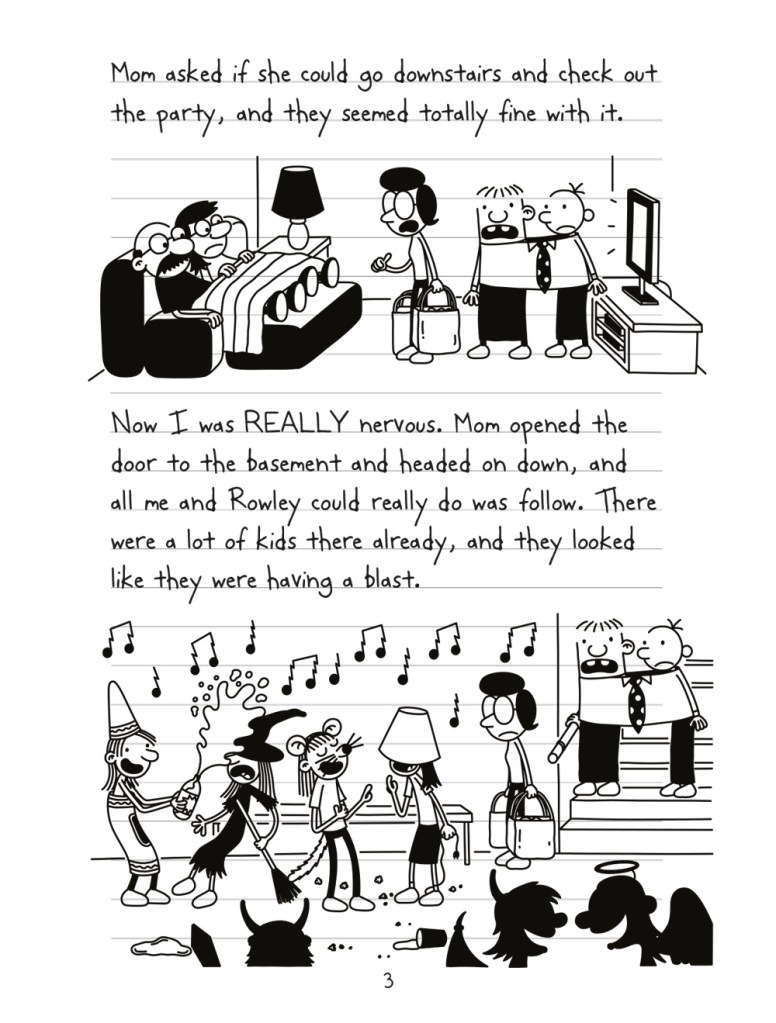
As a parent who has been out of public school for over 20 years, the books give me a sense of what schools are like for kids today – and what kids are like, too. By talking with my daughter about how she reacts to the books, I learn about her school career while we read them. They help me feel more in touch with my child in an age where kids often become secretive and begin to lead more complicated lives.
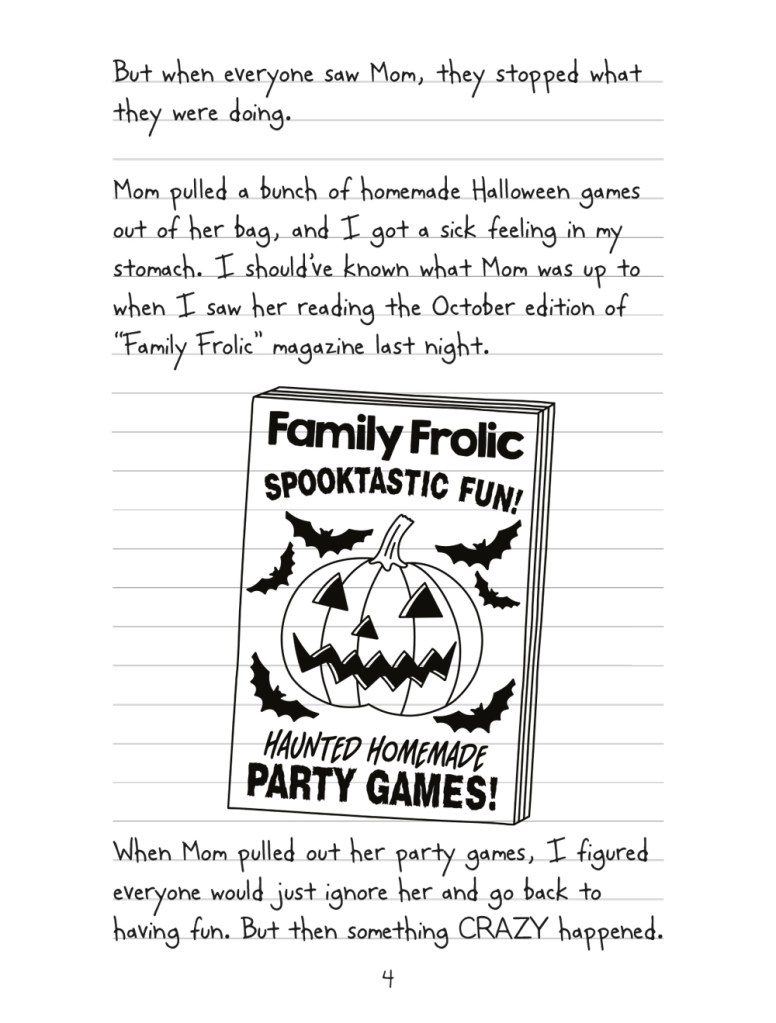
Like Greg, the parents in Diary of a Wimpy Kid are imperfect and deeply relatable. They’re just doing their best and often coming up short like the rest of us. Virtually no one in the series is “good” or “bad”, just like in real life. I find it extremely reassuring to read about parents who keep trying to balance empathy with discipline for their children, and frequently make mistakes in the process. But by the end of each book, they’ve all gotten through the issues of the day despite the challenges and pitfalls — and my daughter and have bonded through laughing together.
Happy reading.
 The Library Vault
Leave a comment