We all need a little tranquility these days.
Stuffed bears and other beloved toys certainly gave us tranquility when we were children, but that’s not what I’m talking about. I’m talking about philosophy. I’m talking about Taoism. I’m talking, of course, about Winnie-the-Pooh.
Now what, I can hear you asking, does Winnie-the-Pooh have to do with tranquility, philosophy, and Taoism? The answers are revealed in Benjamin Hoff‘s The Tao of Pooh, a book of 158 pages that deftly explains the principles of Taoism and applies them to modern life using the seemingly-odd, but, ultimately, not-so-odd example of Winnie-the-Pooh.
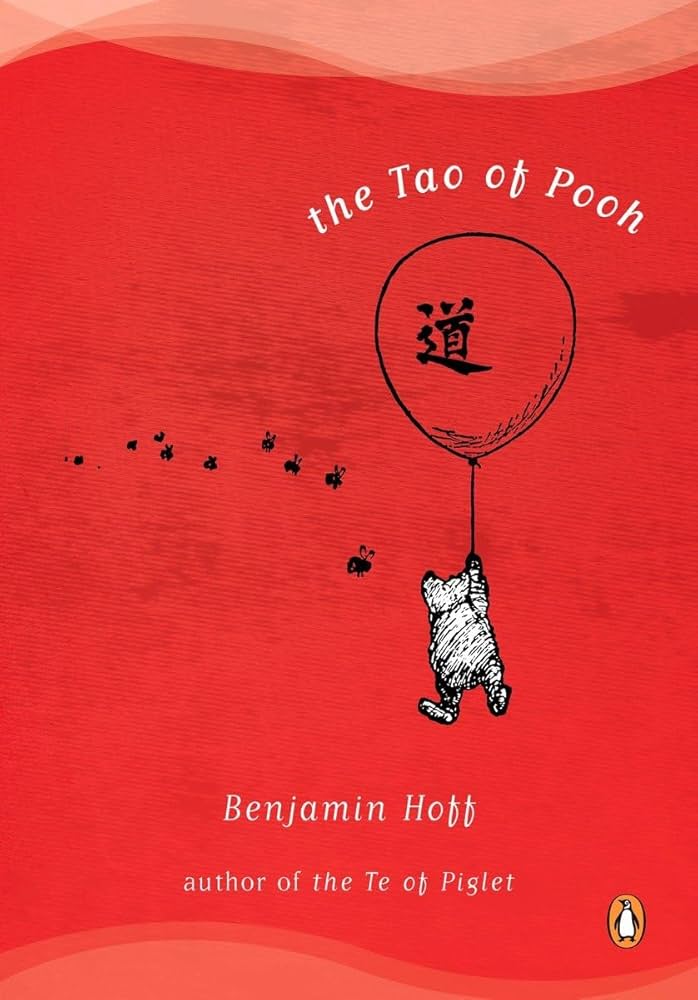
Using excerpts from the Pooh books by A.A. Milne, Hoff makes Taoism approachable and easy to understand. It’s not just a deep Eastern philosophy for hermits and mystics! The tenets of Taoism can be incorporated into everyday life as Hoff illustrates via Pooh, a bear who effortlessly exists very much in the now.
Using Pooh as his Taoist master, Hoff explores “the ability to enjoy the simple and the quiet, the natural and the plain” along with “the ability to do things spontaneously and have them work”.
He uses the examples of Rabbit (Knowledge for the Sake of Being Clever), Owl (Knowledge for the Sake of Appearing Wise), and Eeyore (Knowledge for the Sake of Complaining About Something) to illustrate non-Taoist aspects of life, things that get in the way of happiness. As Hoff observes in his book:
“When you discard arrogance, complexity, and a few other things that get in the way, sooner or later you will discover that simple, childlike, and mysterious secret…: Life is Fun.”
The Tao of Pooh by Benjamin Hoff
And what are the lessons of Taoism?
Things Are as They Are.
Everything has its own Inner Nature.
Enjoy the Process.
Things just happen in the right way, at the right time. At least they do when you let them.
The Tao of Pooh reduces Taoism to its essentials and makes some smile-generating observations along the way using passages from Milne’s stories:
“Rabbit’s clever,” said Pooh thoughtfully.
“Yes,” said Piglet, “Rabbit’s clever.”
“And he has Brain.”
“Yes,” said Piglet, “Rabbit has Brain.”
There was a long silence.
“I suppose,” said Pooh, “that that’s why he never understands anything.”
One of the most basic messages of the Tao of Pooh is Wu Wei, which translates to “without doing, causing, or making.” Hoff refers to this as The Pooh Way, for Pooh Bear doesn’t seem to do much of anything but still manages to get a lot of things done.

The Pooh Way is about effortless effort. It’s about flow. Hoff uses the example of a river that gently flows around the obstacles in its path rather than trying to force a way through. In the end, the river effortlessly softens and smooths everything it encounters. This is the principal of minimal effort that works with the natural order of the world rather than against it. The message is if you try too hard, things often don’t seem to work out. Things can happen spontaneously if they are allowed to do so.
This is a perfect read when you need some tranquility, perfect for those desiring some calmness, slowness, some quiet. And the book is fun. It reads easily, quickly, with humor, wit, and quotes from Milne’s beloved stories. It can’t miss and it doesn’t miss.
I can’t think of a better ending to this post than a very Taoist/Winnie-the-Pooh observation about life:
For a long time they looked at the river beneath them, saying nothing, and the river said nothing too, for it felt very quiet and peaceful on this summer afternoon.
“Tigger is all right really,” said Piglet lazily.
“Of course he is,” said Christopher Robin.
“Everybody is really,” said Pooh. “That’s what I think,” said Pooh. “But I don’t suppose I’m right,” he said.
“Of course you are,” said Christopher Robin.
Dip into the Tao of Pooh and its companion book, The Te Of Piglet. Even if you do not come away enlightened, you will come away smiling.
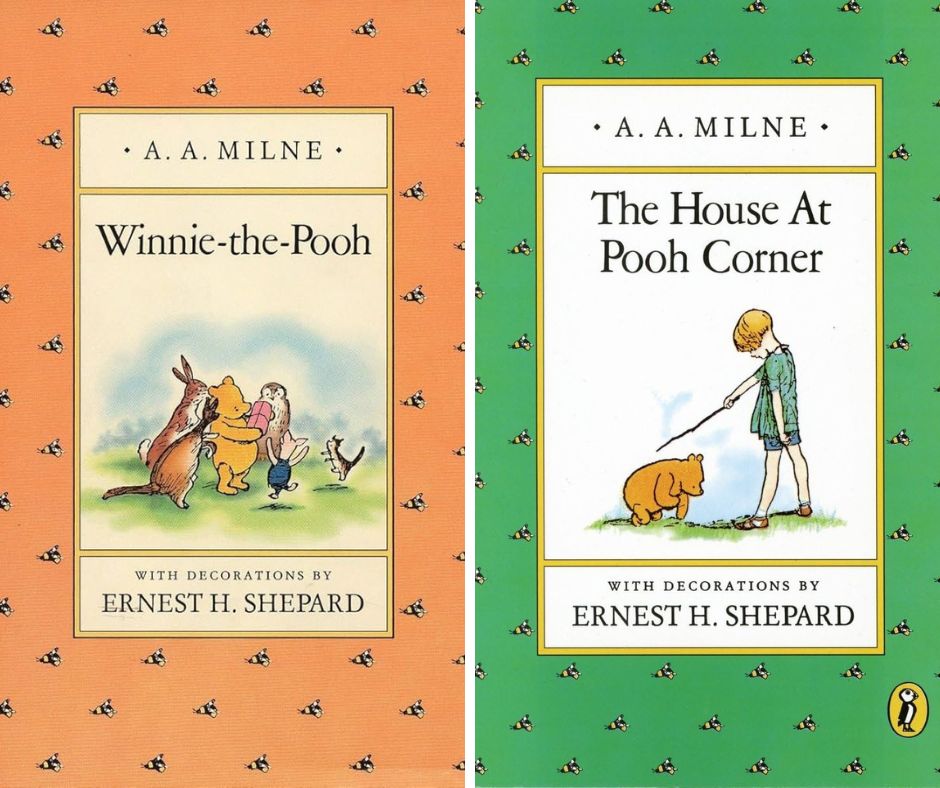
Don’t forget to check out the original Winnie-the-Pooh books by A.A. Milne.
 The Library Vault
Leave a comment