Why do we love the Fall and Halloween season so much here in New England? I’ve lived in every region of the country, and only in New England is the Spooky Season such a dominating force. I can think of two reasons: the dominance of trees, and history. New England has more forests and more history than any other part of the country. Trees define Fall: leaves changing from layers of lush green to shades of red, orange, and yellow. Forests symbolize mystery and secrets in both books and history. So many people – and things – can hide in the deep, dark, depths of millions of trees.
In this post, I focus on books and movies that are “haunted” or “spooky”, not on horror. You will not find much in the way of blood, gore, serial killers, or traumatic murders. You will find haunted houses, atmospheric forests, lonely ocean cliffs, and other eerie happenings. If you prefer questions like, “Was it a ghost, or was it all in my mind?” to slasher films, you’re in the right place.
I also include classic ghostly films, because I’m a firm believer in previewing a novel by watching the movie first. That way, you don’t spend days or even weeks reading a book you’re not going to like. Movie versions of books also tend to be underwhelming compared to the books themselves. If you watch the movie version first, you won’t be disappointed that it doesn’t match up to the book’s quality. The best is yet to come
The Uninvited by Dorothy Macardle
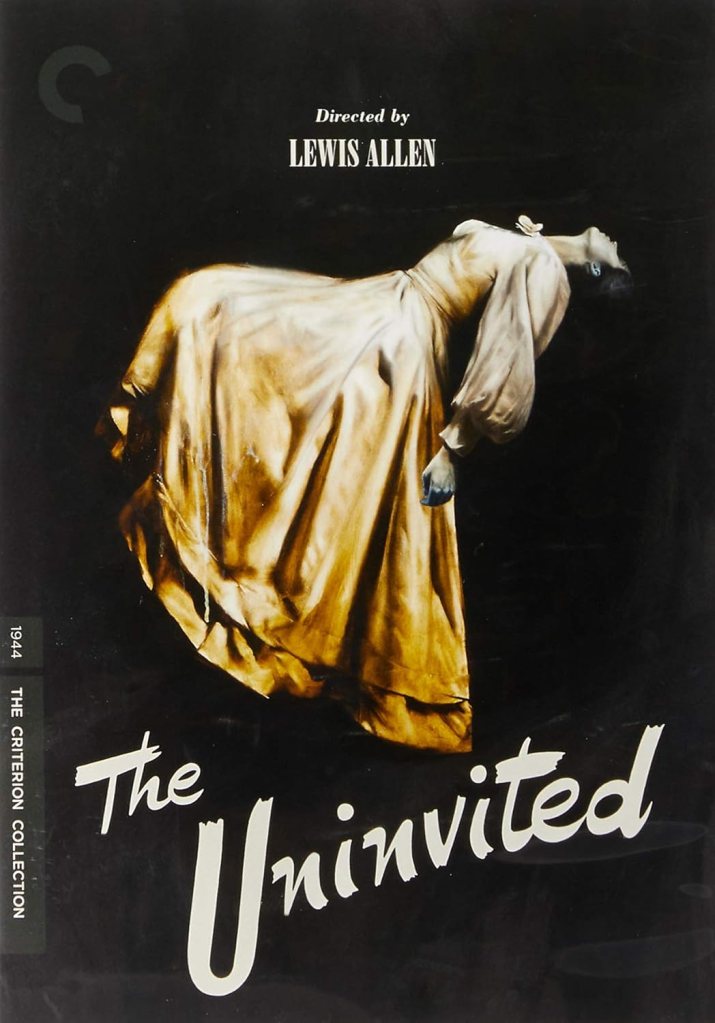
A forgotten classic, both the book and film versions of The Uninvited play tricks on your perceptions with shadows and candlelight, wind and moans … and with people, who are not always what they seem to be.

Siblings Pamela and Rick Fitzgerald accidentally buy a haunted house in their quest to pursue peace and art away from civilization. Their beautiful, and surprisingly affordable, new house perched on top of a cliff over the ocean turns out to be steeped in secrets from the not-too-distant past. As they unravel the mysteries of their new home, they must plumb the depths of both the living and the dead.
Subtle and romantic, The Uninvited fully immerses you in the lush oceanside and the unique old house. Every setting and every person in the story holds deep layers true to life and full of meaning. Whether you just like an old-fashioned haunted house, or want to explore the nuances of motherhood and gender roles still true today, you’re likely to find something to keep you riveted in this classic story.
Rebecca by Daphne du Maurier
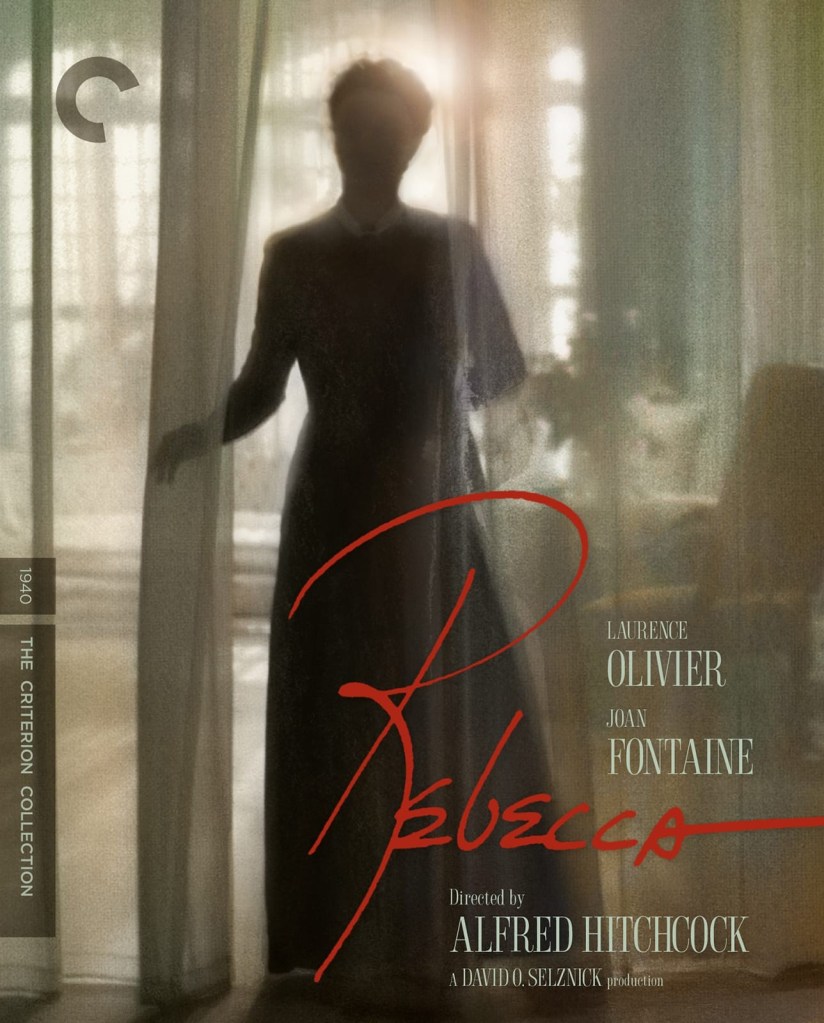
Though not, strictly speaking, a supernatural story, stories don’t get any more spooky or haunting than Rebecca. If you don’t yet know the story, don’t read any spoilers or you will ruin the best part. Simply put: Rebecca tells the tale of a house haunted by the memory of its former mistress.
If you like hauntingly beautiful settings, you couldn’t ask for more than Rebecca. The story begins in the south of France on the gorgeous beaches and hills of Monte Carlo. Max de Winter, a lonely widower, falls in love with a young and innocent companion to a wealthy widow. We never learn her name, though she tells the story. We know her only as “the second Mrs. de Winter.” She and Max marry, and he takes her to his home, a grand estate named Manderley on the West Country coast of England.

The second Mrs. de Winter soon learns that she must contend with the powerful personality of the first Mrs. de Winter, Rebecca. Rebecca, a strong-willed beauty and grand individualist, died under mysterious circumstances at sea. She left behind a still-loyal housekeeper named Mrs. Danvers – played by an unforgettable Judith Anderson in her quintessential role – who will not allow Rebecca to be forgotten … or defeated.

This is a rare occasion where the movie possibly eclipses the novel. Released in 1940 and directed by Alfred Hitchcock, Rebecca won best picture in 1941. The all-star, Oscar-winning cast includes Laurence Olivier, Joan Fontaine, the unforgettable George Sanders, and (of course), Judith Anderson. It’s my favorite film of all time, and an essential watch for movie lovers.
Dracula by Bram Stoker
I’m sure you’ve heard of this famous vampire. But have you read the book? Have you watched the best movie versions?

When this book first appeared in print in 1897, the novel had not yet reached the standard form that we know today. Dracula in its first iteration was essentially a detective novel, with a team of victims trying to understand the mystery unfolding around them. The characters tell the story in the form of letters written to one another. We don’t really understand who or what Dracula is until deep into the book. No one knows what’s happening or why. It’s a disturbing, eerie story that unfolds in an entirely unique way.
You might say, Wait, this isn’t a haunted house story. In which case, I know you haven’t actually read the book yet. This story is all about haunted houses: Dracula’s super haunted castle in Transylvania and his English refuge, Carfax Abbey, are the most notable. The book is full of haunted places, including a ship full of corpses, his victims’ homes, an asylum, and a crypt … to name a few. The story takes you to many haunted places, including all over historical London – full of mist and shadows – herself.

I have three favorite movie versions of Dracula, all very different. Together, they capture the spirit of Bram Stoker’s deeply disturbing tale. The first, Dracula (1931), was arguably the best. Simplicity is the name of the game, with a boiled-down story, a starkness captured in black and white film, and even some unexpected humor:
If you want the movie version truest to the book, watch Bram Stoker’s Dracula from 1992. Directed by the unequaled Francis Ford Coppola, it stars top actors like Anthony Hopkins, Gary Oldman, Keanu Reeves, and Winona Ryder. This version takes great pains to situate the plot in the London of the 1890s, flavoring the story with the air of “this could actually be true …” that you find while reading the book. Bram Stoker left open the possibility that the story just might be non-fiction … if you choose to believe.
Finally, let’s consider Dracula: Dead and Loving It (1995) by the immortal Mel Brooks. Brooks’ farcical interpretation often owes its success to its loyalty to the text. For example, the opening credits roll over authentic illustrations of vampires from historical images:
Brooks imbued the film with many esoteric and exotic touches true to the book and to history. The entire movie is equal parts spoof and thoughtful tribute to Dracula as a work of art. If you haven’t watched it yet, now’s the time.
The Haunting of Hill House by Shirley Jackson
Last but not least, if you like haunted houses, it doesn’t get any more haunted than Hill House. Shirley Jackson wrote my favorite opening paragraph of all time:
Hill House, not sane, stood by itself against its hills, holding darkness within; it had stood so for eighty years and might stand for eighty more. Within, walls continued upright, bricks met neatly, floors were firm, and doors were sensibly shut; silence lay steadily against the wood and stone of Hill House, and whatever walked there, walked alone.
Here begins the development of the strongest character in the novel: Hill House. If you love architecture or the history of houses, you will get sucked into Hill House and never look at your own home in quite the same way after.
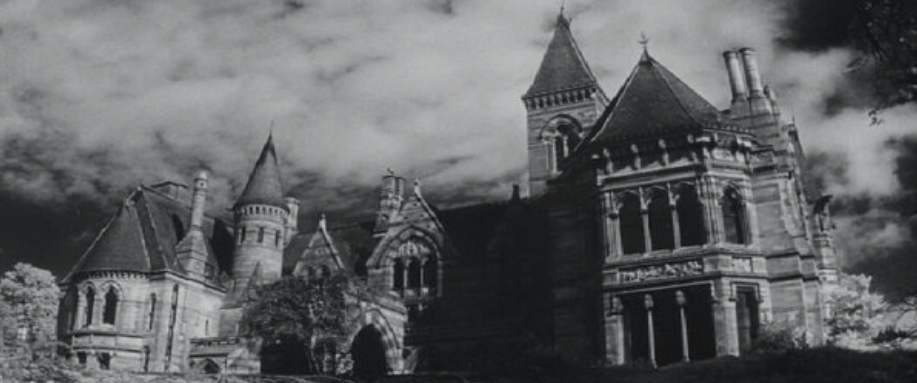
Both the book and the original 1963 film The Haunting convey with startling clarity the ghosts within Hill House without ever showing you a thing. They don’t need to. The best writers don’t need to debase their stories with gory details or flashy spooks: their art comes through what they don’t write. The most frightening things are what you don’t see, but think perhaps you might have heard?
I actually prefer the original The Haunting film to the book, which says something coming from a librarian. Both should be experienced at night, in the dark, and preferably when you’re alone.

 The Library Vault
Leave a comment