
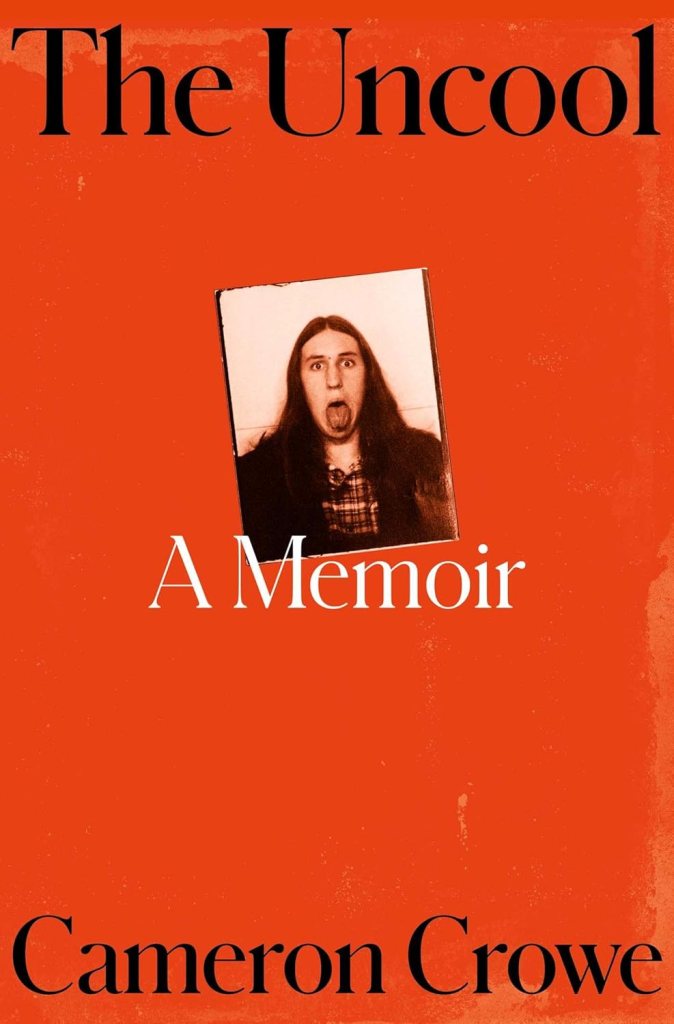
The Uncool: A Memoir by Cameron Crowe
“I am flying high over Tupelo, Mississippi, with America’s hottest band . . . and we are all about to die”
Cameron Crowe did not technically say that line, but he wrote it. It is from the acclaimed film, Almost Famous. This film holds a special place in my heart. The line was the opening to his article on the band that was almost famous, but never was: Stillwater. Stillwater was an enigma – a fictional band that represents many unique characters that roamed around the rock n’ roll scene in seventies. Their legend lingers within the screenplay created by Crowe and come to life in the motion picture. Famous characters like Penny Lane, Lester Bangs, and Russell Hammond were either real people or representations of eccentric characters that impacted Crowe’s life.
Cameron Crowe was a rock journalist by the ripe young age of fifteen. Running around on tour with rockstars, attending their shows, and interviewing them backstage with his handy-dandy tape recorder. The seventies were a different time: elusive, in a way (I may be fan-girling at the moment). Many of the interviews, interactions, and relationships that bloomed from Crowe’s life are a dream many people wished that could have lived. Crowe was able to present it to the world, the best way he knew how. He told a story.
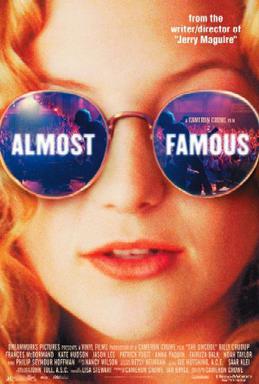
Almost Famous, from my perspective, was a love letter to music. His newly published memoir, The Uncool, is a love letter to his family, specifically his mother. I needed to precede with the film, because without the film, I do not think many would understand the premise of the book. I did not technically read this book, I listened to it. Cameron was the narrator and the sound of his voice was heartfelt. I felt like I was in a living room: in a sea of olive green, a deep plush couch decorated with florals, random family pictures that float on the walls and knickknacks from your grandmother’s home that line the room. It’s an intimate story that bares truth, but still rocks.
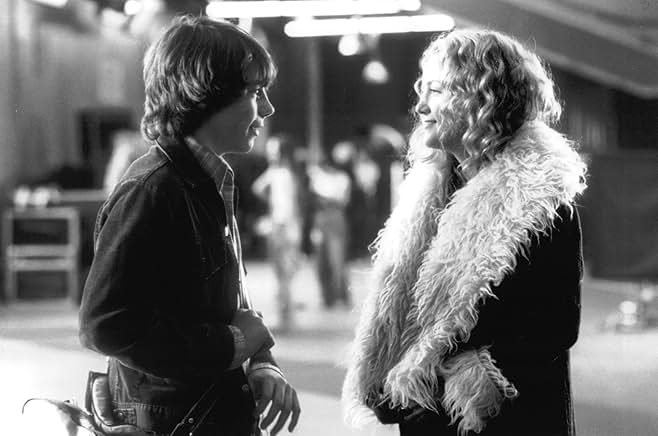
I came across Crowe’s memoir in an unconventional way, just like Crowe’s story itself. Sitting at local watering hole, grabbing a burger and a beer. Almost Famous was playing in the background. I starting quoting a scene. I know most lines from the film. Penny Lane is driving the car with the character William Miller, a representation of young Cameron, and she states,
“I always tell the girls, never take it seriously, if ya never take it seriously, ya never get hurt, ya never get hurt, ya always have fun, and if you ever get lonely, just go to the record store and visit your friends.”
The bartender gave me a double take. They later informed me that he has a new book out – a story about his life. Of course, I had to jump on this. They also said the audiobook was the way to go, since he was the one telling the story. I was in! I love how books find us. Usually when we are least looking for it, something special comes out of the ether and plops right in front of you. Now, here was Cameron Crowe’s time to tell his tale.
The Uncool: A Memoir is the story of Cameron becoming Cameron. Is that a little murky? I could have used bigger words like coming of age or metamorphosis, but no. Its the story of becoming yourself, told through the various experiences they chose to divulge. Almost every chapter began with a quote from his mother, Alice Crowe.
I was reviewing what other people thought about the book and they honed closely in on the glorious and not-so glorious stories of the rock stars like Led Zeppelin, The Allman Brothers, Eagles, David Bowie, and Joni Mitchell. These names make people ecstatic and, do not get me wrong, Crowe painted a honest picture of these fellow musicians, but that was just the glimmer of the story. Like rock ’n roll itself, it is fun and enticing. It is the icing on the cake. Crowe delves deep into stories about his sisters, mental health, his father, and ultimately his mother.
The book began with the opening of the Almost Famous: The Musical. By bringing together his family and the ’genius of rockstars’ centering around his own story, did that bring him full circle? Was that the honest way he could tell a story of depth, sprinkled with glitter? It was not the story that a rock magazine would have wanted him to write. Was it not his young self, understanding just a glimpse of what life is? I think the art of growing older comes with a perception of the life that is transformative. A little thing called wisdom, we don’t gain wrinkles for nothing.

I could be reading a little far into it. Yes, this is great rendition of a Crowe’s successful life in music and the introduction into the film industry. The focus of his story was how his family molded into all of this. As Crowe came of age, and not just the typical teenage way, but when life gets real. Like when a dear family member dies, or they get sick, and realizing your parents are aging, all play into his memoir and it is centered around a really cool rock n’ roller, claiming himself as the uncool. I think Cameron Crowe is pretty darn cool.
Cameron Crowe is a bit of an underdog and so is the wine that I plan to pair with his memoir. In the 1970s, America was not well known for its wine. The French dominated the wine industry. Some you may remember drinking Carlo Rossi, Boone’s Farm, or Asti Spumante. The United States did not have the presence or austerity that came with wine or the industry. That is, until the year 1976 and the Judgement of Paris. The Paris Wine Tasting was a competition to celebrate the United States’ Bicentennial. A blind tasting, it was noted that a Napa County wine conquered in each category. The wine that triumphed over all was a Chardonnay, Chateau Montelena. If you would like to see the film rendition of this prevailing story it is known as Bottle Shock, starring the late Alan Rickman.
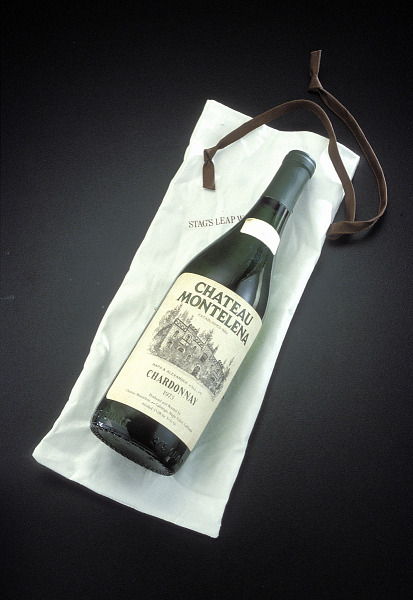
I have never had Chateau Montelena’s chardonnay. The 1973 vintage resides on display at the Smithsonian of American History. I chose this wine because America was the underdog in this story and prevailed. Cameron Crowe is also an underdog, being so young and interviewing the cream of the crop rock stars making a name for himself and succeeding. The Chardonnay and Crowe might had been deemed as “uncool,” but they were actually the coolest in the room. The Judgement of Paris is a significant story in wine history, specifically for domestic wine and America entering the stage against some of the oldest and best winemakers in world.

Cameron Crowe tells stories either of other individuals lives or exploring his own. Crowe made history with his story telling and Chateau Montelena is its own story. Both are significant in each industry and they share something significant: family. I said the memoir was a love letter to his family, and the backbone of wineries are usually families. They run their land and it is their home. The Barrett Family is still running the vineyard today. They celebrate their history in the best way possible, by making pretty amazing wine. Cheers to the Barretts and the Crowes, and keep the legacy of being cool.
 The Library Vault
Leave a comment